ARCTIC MEMORIES: THE LOST ART OF THE CHILL-OUT

Filed under:Johan Agebjörn,Music — posted by I J Wilson on March 5, 2011 @ 9:09 am

The Mountain Lake is the second ambient album from Swedish producer/composer Johan Agebjörn to be released on the US ambient label, Lotuspike. His first album, Mossebo, came out in 2008. Johan is also the producer behind the neo-italo disco project, Sally Shapiro, who have gained a solid international reputation after releasing their Disco Romance album back in 2006.


Johan's musical interests have their roots in 90s ambient music with artists like Autechre, The KLF, and Biosphere. But he also has a number of other influences coming through in his work like Hi-NRG dance music, Scandinavian pop (he was a big fan of A-Ha growing up) and French House.


Ambient music was a massive genre of the early nineties, with the chill-out room being a major feature of the rave scene. This was a productive period for new ambient music, but it also drew in the earlier ambient artists like Klaus Schulze, Tangerine Dream and Vangelis, introducing them to a new generation of kids.


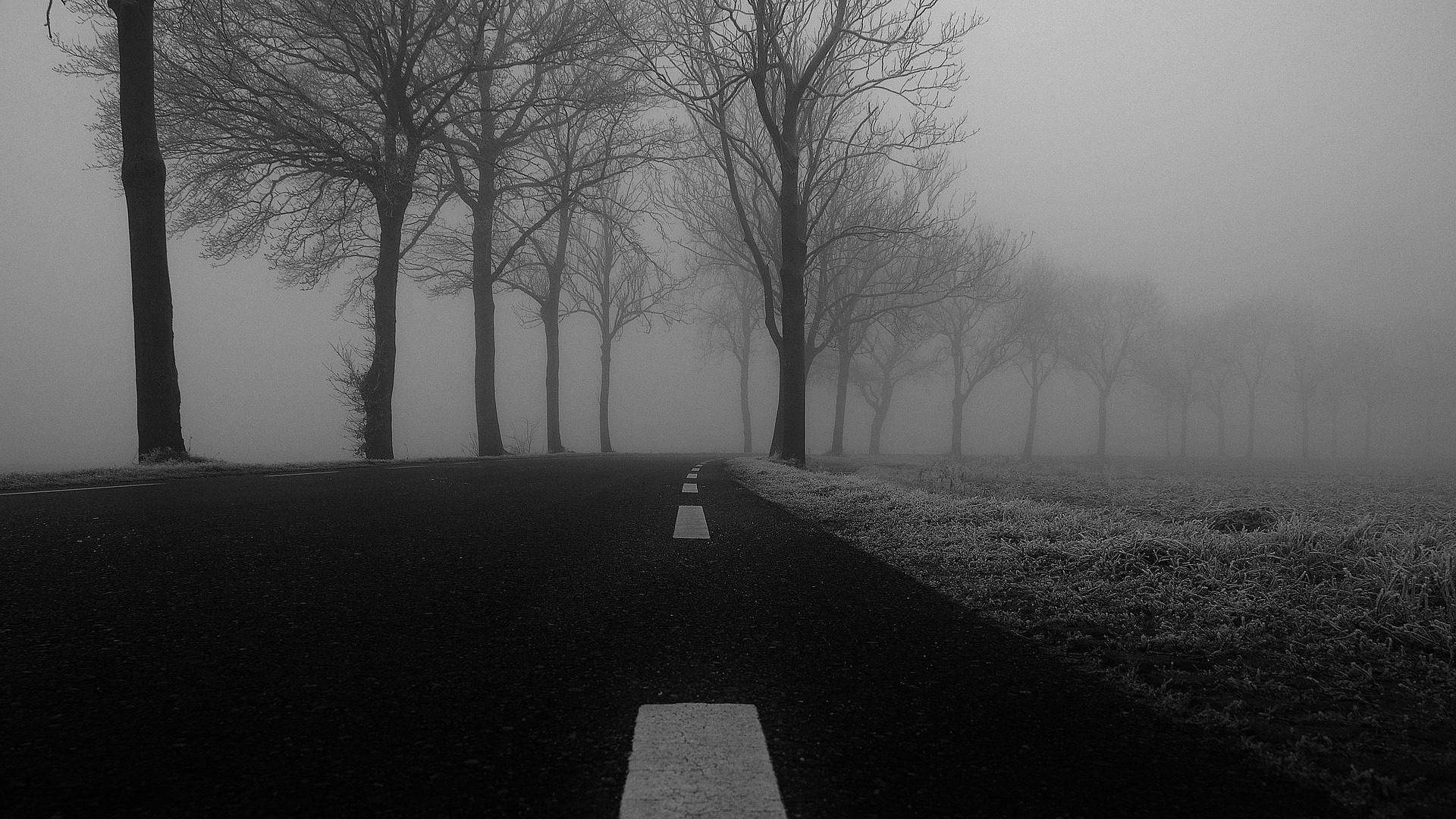
Johan is also tapping into the art of sound-sculpting the Scandinavian landscape, which has a pedigree heritage in that part of the world. In 1992 there was the brilliant album Polar Region by the duo Cosmic Trigger which captured the musical equivalent of fjord mists evaporating in the morning sun. Glacial ambient music has also come to be regarded as a sub-genre of ambient and experimental music.


The title of The Mountain Lake is a literal English translation of the name of the suburb that Johan lived in when he started working on material for this album, an area known for being rough. But that is one of the beauties of art, that it has the power to transform things by viewing them in a new light.


He has worked with a number of people in putting this album together: Lisa Barra returns to provide vocals on 'Love Ray' (having originally provided vocals on a number of key tracks on Mossebo).  Also, Steve Moore of Pittsburgh duo Zombi, who has worked with Johan before under his Lovelock guise, provides a remix of 'Siberian Train' from Johan's first album.


Clockwise from top left: Johan Agebjörn, Sally Shapiro, Glass Candy, Lisa Barra


But there is also a couple of new names that pop up: Sylwia van der Wonderland is a singer based in Amsterdam, originally from Poland, as well as NeonCoil from Germany who make industrial electro in the style of Soft Cell and Anthony Rother.


This is one of Johan's skills: choosing good people to work with. The list of names that Sally Shapiro has been associated with -- The Juan Maclean, Junior Boys, Lindstrøm, as well as some of the lesser known names, Bottin, CFCF, and Bogdan Irkük  -- is absolutely amazing.


As for The Mountain Lake, this new album is a  mixture of new tracks as well as some re-worked material:


'Spacer Woman from Mars' is an ambient version of a sparkling italo-disco track that Sally Shapiro released back in 2008 as a 12” on Lo Recordings (also appearing on the first Milky Disco compilation).


'Amylium Casparium' is Johan's track with NeonCoil, and has the synthesized choir sound made famous on Brian Eno's Music for Airports.


'The Stones are Blasted' is a new track, show-casing Johan's talent for staging his songs like journeys, full of musical twists and turns, and a palpable sense of excitement. (There is a free 128k MP3 of it at the end of this post). 


'Spiral Staircase' is a downbeat track with a de-tuned melody, chip-tune squelches and Asian bells.


'Swimming through the Blue Lagoon' was the atmospheric opener for My Guilty Pleasure, but this version is slightly reworked by way of a Casio keyboard. (The original shorter version is really worth checking out).


'Zero Gravitation' is absolutely classic ambient techno, with its long notes and driving bassline. (Below is a ''beatless' version of Zero Gravitation posted on youtube by Husmus Media - but headphones are still needed for maximum listening pleasure)


'Take Me Home' has elements of William Orbit's Torch Song project and Hans Zimmer's soundtrack work for films like Gladiator. The vocals are by Sylwia van der Wonderland.


'The Chameleon' is an edited remix by Agebjörn of Portland duo Glass Candy.  It has a lot of low-pass filtering, sustained notes and radio static going on. The original remix appeared on the second Milky Disco compilation.


'Last Tram to Comet Square' is the epic journey song of the album,  rhythmically punching its way through 13 minutes of perfect ambient programming.


'Love Ray' is a sweet concoction, with Lisa Barra breathing life into it. (This would be the perfect end point for the album as the listener drifts off to sleep).


'Siberian Railway' is a bonus track, a remix of a two part track from the previous album, inspired by Johan's childhood journey with his mother on the legendary Trans-Siberian Railway. It has been remixed by Steve Moore, giving it a trance bassline and techno beats.


                                                                             *                                                                           


My main criticism of the album is that some of the tracks are of varying styles, and a few of the earlier ones like The Stones are Blasted and Spiral Staircase, do not sit well together. Part of the reason for this is, that unlike other ambient artists, Johan has not created this album in a single sitting, but rather has collected the tracks together over time. This kind of disparity can break the continuity of an ambient album, where continuity -- that one long, deep journey -- is a paramount feature of the genre.


But this changes with the second half of the album where the music takes on full effect: Zero Gravitation, Take Me Home, The Chameleon, Last Tram to Comet Express, and Love Ray, all go into deep, delta-wave territory.


Although Johan doesn't tour as Sally Shapiro, he could easily put on a great ambient show -- with a good video-mixer/VJ blending projected images, and an atmospheric venue filled with comfortable cushions, he would reintroduce a new generation to the lost art of the chill-out.


The Mountain Lake is available now through CD Universe, Spotted Peccary Music, and the itunes store. (But for the time being, you can download 'The Stones are Blasted' free here)


[audio:http://www.fotwaudio.com/wp-content/uploads/2011/03/The-Stones-Are-Blasted.mp3|titles=The Stones Are Blasted]


SELECTED DISCOGRAPHY:

Disco Romance (2006) Diskocaine / Paper Bag Records

Mossebo (2009) Lotuspike

My Guilty Pleasure (2010) Permanent Vacation / Paper Bag Records

Remixes by Johan:

The Case is Closed - Friday Bridge  (available as a free download)

LINKS:

Johan's website: http://www.johanagebjorn.info/

Lotuspike:  http://www.lotuspike.com/
Share and Enjoy:
  • email
  • Print
  • Facebook
  • Twitter
  • RSS
  • Digg
  • del.icio.us
  • Google Bookmarks
  • StumbleUpon
  • Yahoo! Buzz
  • Add to favorites
  • LinkedIn
  • MySpace

ARTIST PROFILE: SEJA

Filed under:Music,Seja — posted by I J Wilson on January 17, 2011 @ 1:49 pm


AUSTRALIA HAS MANY TALENTED women paving their own way in an industry that is traditionally dominated by men. One of them, Seja Vogel, recently toured with Sarah Blasko, having gone out on a limb in 2010 to release her first solo album, We Have Secrets But Nobody Cares.                                                 

Seja grew up in Brisbane having migrated from Germany with her family when she was just eight years old. In her late teens, she and her brother Mirko formed Sekiden with their friend Simon Graydon, and had releases on Modular RecordingsMicroindie, and Canadian label Boompa. This led to other projects for Seja, like touring and recording with Regurgitator for their 2006 album, Love and Paranoia.                                              

But in 2009, Seja decided to go her own way, focussing on an album of her own. She spent a year locked in her bedroom with a stockpile of vintage synths; and after some mastering help from her brother, she emerged victorious with an amazing album that Sydney label, Rice is Nice, released March last year.                  

By July, she was the touring with Goldfrapp; a smart pairing up, in terms of sound and approach to music creation, as Goldfrapp are famously known for their use of vintage equipment.                           

However, Seja's next big break came when Australian singer, Sarah Blasko, now living in the UK, chose Seja for the Australian leg of her album tour, As Day Follows Night.             

Seja put together a band, consisting of singer and guitarist Kate Jacobson from the alt-country duo, Texas Tea, and Renae Collett from the now defunct, Gazoonga Attack, playing drums. She also reworked many of her electronic parts so that they could be performed live.             

Then, over a four week period in October-November, the two bands set off on an epic twenty-two concerts (plus a few extra) across most of Australia's major cities, including country towns in regional Australia.             

For her Sydney show (and possibly for many of her others), she had to contend with a noisy audience, but sucessfully managed to capture their attention with her friendly personality (at one point joking that she was feeling spooked after realising that the head of an ornamental frog that she and other two had attached to their instruments for good luck, was missing!) The trio then powered through their set-list, impressing the audience with their regular switching of instruments and positions on stage, and successfully psyching them up for Sarah Blasko.      

It's not an easy thing for a solo artist who has built their studio album on overdubs and multiple instrument parts to go on tour, but Seja did a great job.            


On the Road: Seja practicing in the back of a Castlemaine theatre with guitarist Kate Jacobson sitting on the stairs. (Photo courtesy of Kate)            


SHE'LL GET TO YOU      

ONE OF THE STRONGEST features of Seja's music are her vocal harmonies, which she achieves by layering her voice over itself many times. This was a technique that Enya was famous for, sometimes overdubbing up to seventy times. One of the best songs of the album, 'Sing Me The Song Like You Said', has some of these pure vocal breaks, giving an already dramatic song, a greater tension.      

'Framed You in Fiction' has guest vocals from Saul Jarvie of Melbourne band Microflora, a nice addition to the overall feel of the album which could best be described as "hopefully romantic with a slight grunge tinge."   Seja also taps into her German heritage with ''Wir Haben Geheimnesse'  which translated into English, forms part of the album title, We Have Secrets But Nobody Cares.      

And then there is the flagship song of the album - 'I'll Get To You' - which is one of the sweetest pop songs on record.
                              
There is definitely more to Seja's music than just a love of quirky synthesizers. She has been around long enough in the music scene to iron out her influences and develop her own sound. The simple repetitive melody of some of her songs have the quality of an English lullaby, while her vocals are like traditional Swedish folk harmonies. Her lyrics are also incredibly romantic.       

I initally only expected to like a few of the songs on the album, having already heard 'I'll Get To You' on a promo sampler; but buying the album, rather than picking the eyes out of what songs sounded best online, was one of the better things I did last year.  Seja really does get to you.      


IN HER OWN WORDS                              

Not long after Seja returned from her tour, I got in contact with her by email via her record label to ask her the following questions...                             

Who played what in your band? Was it a line-up that you created especially for the tour?                            

I play keyboards, guitar and sing. Kate Jacobson plays guitar, keys and sings bvs, and Renae Collett plays drums and keys. I picked them especially for their talent and general awesome-ness.                            

Was it difficult to convert your album sound into a live performance? (I think it sounded great!)                            

It was definitely a complicated thought process trying to cut down from the layers upon layers of synths and vocals on the album and pick the right parts to play. I also wanted to avoid playing too many songs to backing track to make the live show a little more 'real'. I think it sounds pretty different live, but hopefully still good.                            

How did you become involved in music?                            

I sort of fell into it. I've always loved playing the piano and guitar, but never really wanted to be in a band because I was really shy. I started playing just for fun with my brother and his friend in our bedrooms while we were in high school, and that eventually turned into 'Sekiden'. Then I suppose music just avalanched in my life.                            

Who would you consider to be your main musical influences?                             

I think growing up it was always my brother, and to a certain extent he still is a big influence on me and my music. (He produced my album) I am also very influenced by people like Mark Mothersbaugh from Devo and other people who are really into interesting pop music and analog synthesizers.                            

Is there a particular sound, or time in music (even if it is current) that you draw inspiration from?                            

I don’t think there is one particular time in music I draw inspiration from. I sort of find it in weird places like a certain guitar sound, or keyboard filter sweep, or the layers of vocals in an Enya song or something.                            

What is the appeal of vintage synthesizers? Do you have a favourite?                           

I just think they sound and look amazing. And a lot of them are very unpredictable which is exciting. My favourite live synth is the Roland SH101 because it is incredibly versatile, simple, small, robust. And you can always tell its an SH101 when you hear it. I like that it has such a familiar sound.                           

Can you tell me a little bit about your vocal overlaying technique?                           

I love vocal harmonies and choirs, but I have never written scores or really understood the theory behind the notes. So I just sing a melody or harmony and then one by one, find notes around them that sound good. I never start off with a plan, it just sort of falls into place.                           

What are you favourite songs on your album?                           

At the moment I really like 'Sing me the song like you said'. It has about 15 layers of keyboards at the end alone. And I played them with about 5 different analog synths. Which is exciting.                           

I'm thinking about your song Wir Haben Geheimnisse - do you have German heritage?                              

Yes I am German. I moved over to Australia with my family when I was 8.                           

Will you continue working as a solo artist?                           

I'd definitely like to continue doing this for a while. It's really fun.                           

How important is your audience? Do you feel that it is something that is growing over time? Is it difficult to maintain?                           

I feel so lucky that anyone likes what I do. I know its not a given so I appreciate anyone who will listen to my songs. I never think too much about how many of them there are or how I must maintain interest.                            

I know it shouldn't matter, but are you in a different position being a female artist? Do you think that it is a good time for female artists in Australia at the moment (i.e the success of Sarah Blasko, Clare Bowditch, etc.)                           

I think as much as 'times are changing' etc, there is still a certain view of women in music that is different. I played a show recently with my friends Otouto from Melbourne, (who are absolutely amazing, gifted singers and musicians) and someone came up to us afterwards and said 'its really good that you girls are giving it a go'. He probably didn’t mean for it to sound quite as patronising as it came across to us, but that pretty much sums up a lot of peoples attitude. Having said that, people like Sarah Blasko and Clare Bowditch are definitely helping by being smart and talented front women.                           

Thank You Seja!                            

 Seja: Wir Haben Geheimnisse by gaga-digi                            

 'We Have Secrets But Nobody Cares' is available on CD through Rice is Nice and digitally through itunes.                                                  

LINKS:                           

 http://sejamusic.com/                             

http://www.riceisnice.net/

Share and Enjoy:
  • email
  • Print
  • Facebook
  • Twitter
  • RSS
  • Digg
  • del.icio.us
  • Google Bookmarks
  • StumbleUpon
  • Yahoo! Buzz
  • Add to favorites
  • LinkedIn
  • MySpace

THE ROMANCE OF NEW YORK ROOFTOPS

Filed under:Joe Jackson,Music — posted by admin on December 25, 2010 @ 10:26 am
 

Entertainment industries are like cartels, impossible to crack, unless you are young and attractive, and have the requisite talents -- you can sing in key, and dance in time. You also have to be starry-eyed enough not to see the machine at play. 


But sometimes a real talent makes it through: Joe Jackson, a singer-songwriter from the late seventies, who had the hit 'Is She Really Going Out with Him?' grew up in England, and drew on the wisdom of supportive parents, for strength and inspiration in his music career. 


It was his 1982 album, Night and Day, that brought him into the spotlight of the Gods. The album was a tribute to Cole Porter and the Gershwin brothers, and the art-deco elegance of 1920s New York.


Disco was in its dying day in the early eighties. However with the song 'Steppin' Out', Joe had restored some of its magic -- and a bit more -- with its simple, fast-paced bassline, and his crystal clear chords and voice soaring over it like a bird.


The actual music video played a vital part of the song, with it's glamorous footage of blinking lights and yellow cabs, capturing the Big Apple's nightlife and the excitement of staying in up-market hotels.


Thanks to Richard for helping me identify Steppin' Out -- it's a song that has haunted me for years!


Merry Christmas everyone!

Share and Enjoy:
  • email
  • Print
  • Facebook
  • Twitter
  • RSS
  • Digg
  • del.icio.us
  • Google Bookmarks
  • StumbleUpon
  • Yahoo! Buzz
  • Add to favorites
  • LinkedIn
  • MySpace

A MASTER CLASS WITH NITIN SAWHNEY

Filed under:A Throw of Dice,Music,Nitin Sawhney — posted by I J Wilson on November 18, 2010 @ 9:01 pm
Nitin Sawhney delivers an exclusive set at The Roxy
Nitin Sawhney live at the Roxy (photo courtesy of Parramasala by Jamie Williams / ICE)

AS PART OF PARRAMASALA 2010, a festival celebrating South Asian culture funded by Parramatta Council and the NSW government, the multi-talented British composer Nitin Sawhney and his band of classical Indian musicians, were brought out to perform the soundtrack to the silent Indian film, A Throw of Dice. During his stay, Nitin gave a masterclass in film scoring and composition to a group of Sydney musicians at the Switch Digital Arts Centre. 


Nitin Sawhney first came to international fame when he and a group of other artists like Talvin Singh, were identified in the late nineties as being part of a rising British music scene known as the 'Asian Underground'. Marrying traditional Indian sounds with club music, they revealed a musical side of the United Kingdom that, up until then, had been largely unknown outside of Britain.  


As time went on, Nitin moved away from strictly club music into the world of jazz fusion and film-scoring, influenced by the jazz guitarist John McLaughlin, who had travelled to India in the seventies to study Indian music and spirituality; and the film composer Ennio Morricone, whose unique and dedicated approach to film scoring must have greatly appealed to Sawhney. 


Growing up in a musical household, Nitin had taken lessons in piano and classical flamenco guitar, as well as learning traditional Indian instruments. He played in multiple bands from punk to jazz during his formative years, and after experiencing a period of uncertainty in his early twenties, he eventually decided to concentrate all of his energy into music. 


It was a good decision. Over the past fifteen years, he has released 8 albums, scored 40 films, and worked on countless projects with other musicians, dancers and visual artists. He has also become a high profile figure in the UK, serving on music advisory boards, and helping to set up programs for young musicians.  


 A Jungle scene from A Throw of Dice, a treasure from the British Film Institute archives by German film director Franz Osten.

ACCORDING TO NITIN, INDIA has the most advanced rhythmic systems in the world. He described how the footwork of a dancer is in synch with the percussion, taking the same vocal cue - so when the vocalist speaks, both the dancer and drummer know exactly what to do. 


He also demonstrated how there is a 12 beat system both in flamenco and classical Indian music, and that one of the flamenco styles, the bulería, can easily be integrated with Indian rhythms. As all the participants had been asked to bring their instruments, he broke the class into two groups, and had them go off and improvise on this 12 beat system. 


When it came to film scoring, he taught the class that it was important to focus on melody, rather than overworking the harmonic side of composition - that an oversophisticated harmony can kill the melody.


Besides Morricone, he also spoke about his appreciation for Ravi Shankar's music for the Indian director Satyajit Ray; how the sitar-player had sat down and improvised for 12 hours straight, from which the director could pick and choose the best parts for his first and most famous film, Pather Panchali.


A nice moment came in the class, when one of Nitin's band members, Ashwin Srinivasan, who had been sitting in the back row for most of the session, was able to borrow a bansuri - a traditional indian flute - from one of the participants who had brought along a big collection of them. Ashwin joined Nitin on the stage, with tabla player, Aref Durvesh, to perform a moving piece of music. 


The only disappointment was that the class did not get to directly play with Nitin. But overall,  it was a great opportunity, and very special, that it was held in the Western Suburbs.


Keep your eye on the Switch / Information + Cultural Exchange website for more events like this in the future, and thanks to Gary Paramanathan for his help.


Some pictures from the class:

Share and Enjoy:
  • email
  • Print
  • Facebook
  • Twitter
  • RSS
  • Digg
  • del.icio.us
  • Google Bookmarks
  • StumbleUpon
  • Yahoo! Buzz
  • Add to favorites
  • LinkedIn
  • MySpace

THE EIGHTIES ARE BACK AT THE POWERHOUSE MUSEUM

Filed under:Music,The Eighties are Back — posted by I J Wilson on October 11, 2010 @ 11:29 am


A student draws the Prophet-5 synthesizer at the Powerhouse Museum

If you live in Sydney, the Powerhouse Museum currently has an exhibition 'The Eighties are Back' dedicated to life in the 1980s.


Though sometimes people think of this decade with a groan, lots of great things came out of it, especially in the music department.


Primarily aimed at kids and nostalgic parents, with table top arcade versions of Pacman and Ghouls and Ghosts, and Masters of the Universe and Strawberry Shortcake figurines, the exhibition also contains a great wealth of Australian music history, with flyers, records and posters for metal and punk bands like Mortal Sin and I Spit on Your Gravy, the graf and electro scene, not to mention memorabilia for the whole RAT/pre-rave acid house parties put on at the Hordern Pavillion.


It also looks at how the latest generation of Australian indie-dance acts, groups like Cut/Copy, The Presets, and Empire of the Sun, have borrowed some of their look and sound from this often and unfairly maligned decade.


The exhibition finishes end of March 2011.


For more information, visit the exhibition micro-site:


http://www.powerhousemuseum.com/the80sareback/

Share and Enjoy:
  • email
  • Print
  • Facebook
  • Twitter
  • RSS
  • Digg
  • del.icio.us
  • Google Bookmarks
  • StumbleUpon
  • Yahoo! Buzz
  • Add to favorites
  • LinkedIn
  • MySpace

ONE FROM THE VAULT: THE DICKIES ‘NIGHTS IN WHITE SATIN’

Filed under:Music,The Dickies — posted by I J Wilson on September 18, 2010 @ 12:24 pm

'Nights in White Satin' was a single from the Dickies 1979 album, Dawn of the Dickies. It was a cover of the Moody Blues song of the same name.


The Dickies initially courted controversy with a picture of them dressed up in satin Klu-klux Klan robes — an idea that may have come from the play-on word title 'Knights in White Satin' that Giorgio Moroder had come up with for his own version of the song — but the picture was pulled in favour of a more sanguine photo of them dressed up in white tuxedos.


Although Stan Lee's vocal-style was influenced by Joey Ramone, the Dickies had a greater level of key-changes and melodies, as well as a ska /Madness influenced saxaphone, giving their music a highly likeable sound.


This is the original, running at half the speed: 


LINKS:

The Dickies Homepage:  www.dickies.com

UK label re-issuing their music: www.captainoi.com
Share and Enjoy:
  • email
  • Print
  • Facebook
  • Twitter
  • RSS
  • Digg
  • del.icio.us
  • Google Bookmarks
  • StumbleUpon
  • Yahoo! Buzz
  • Add to favorites
  • LinkedIn
  • MySpace

SOFT ROCKS

Filed under:Music,Soft Rocks — posted by I J Wilson on August 26, 2010 @ 12:41 pm

Over the last five years, Brighton group Soft Rocks have been unable to put a foot wrong. After releasing a number of 12 inches - the Disco Powerplay and Chocolate Love series - and last year remixing MGMT's Of Moons, Birds and Monsters, the news is that they are currently working on a full album, this time entirely comprised of original sounds. 


They have also just started doing a regular radio show "Live From the Bowels of Brighton" on Deep Frequency.


Below is the stunning Leave Your Earth Behind from the second Milky Disco compilation, which also came out as a 12" and digital download on the Redux label. With synths in the style of Japanese group Kitaro, a tightly structured framework of rhythms and early-rave/deep-house repetitive dischords, Leave Your Earth Behind is a heavily-layered and complex track with a real driving-through-the-backstreets-at-night feel.


LINKS:

http://www.myspace.com/softrocksrecordings

Share and Enjoy:
  • email
  • Print
  • Facebook
  • Twitter
  • RSS
  • Digg
  • del.icio.us
  • Google Bookmarks
  • StumbleUpon
  • Yahoo! Buzz
  • Add to favorites
  • LinkedIn
  • MySpace

IGLOO MAGAZINE’S TENTH BIRTHDAY

Filed under:Igloo Magazine,Music — posted by I J Wilson on June 17, 2010 @ 6:05 pm
 

   The noble Prophet-5 synthesizer (picture courtesy of synthgear.com)

Igloo Magazine is an online magazine dedicated to the more unusual areas of electronic music: italo-disco, synth-pop, new wave, detroit techno, abstract and experimental genres, covering obscure labels and artists from around the world, and describing itself as "focusing on electronic music that is unique and under-represented."


In its tenth year — quite a feat for any website, especially one covering music, they have kept track of releases and profiled labels like Anna Logue, Das Drehmont and Aube, Belgium's Flexx and New York's Minimal Wave, as well as bigger labels like Warp and Environ; reviewed a range of international artists, from Australia's Snog and Oren Ambarchi to Sweden's Prins Thomas, Holland's Novamen, and the Finnish experimental artist Mika Vaino. Igloo Magazine has also introduced its readers to new genres like chiptunes (way back in 2001), IDM and doombient, and has covered landmarks in the music industry like the demise of music retailing chains, netlabels and the impact of the ipod.


The strength of Igloo is its range of contributors, all with specialist knowledge, overlapping to create an expansive guide to interesting music. One of the greatest problems of the internet is its lack of original material; most of it is information repeated ad infinitum, pinched from traditional news websites, especially news about entertainment, music and movies.


Igloo Magazine is a rare bird in that it is has a high editorial standard (you'll rarely find a typo), articles are well-thought out and researched, and discretion is used in the material they choose to review. Think of Wire Magazine, but on a shoestring budget.


Igoo Magazine (igloomag.com)
Share and Enjoy:
  • email
  • Print
  • Facebook
  • Twitter
  • RSS
  • Digg
  • del.icio.us
  • Google Bookmarks
  • StumbleUpon
  • Yahoo! Buzz
  • Add to favorites
  • LinkedIn
  • MySpace

NEW GUILTY PLEASURES: SALLY SHAPIRO REMIXED

Filed under:Music,Sally Shapiro — posted by I J Wilson on April 19, 2010 @ 9:45 pm
 My Guilty Pleasure Remix Cover Art

Coming out late last year My Guilty Pleasure was Swedish duo Sally Shapiro's second album, a nice follow up to the successful Disco Romance of 2007.  Producer Johan Agebjörn, drew heavily on his skills as an ambient artist (a solo album of his had been released on the Lotus Spike label in 2008), as well as his knowledge of old-school production techniques, like stuttering vocals, to create a highly atmospheric collection of new songs with Sally.


At the time of its release, German Label Permanent Vacation also issued two 12 inches of Miracle and Love in July, which featured excellent remixes by Bogdan Irkük, CFCF, and Bostro Pesopeo. Now they have been collected together, with some new remixes, for a digital EP release.


Tracklist:


1. Save Your Love (Lovelock Remix)
2. Looking At The Stars (FM Attack Remix)
3. Love In July (CFCF Remix)
4. Miracle (Bogdan Irkük Remix)
5. My Fantasy (Bottin Remix)
6. Jackie Jackie (Junior Boys Vocal Remix)
7. Love In July (Bostro Pesopeo Remix)
8. Swimming Through The Blue Lagoon (Boat Club Remix)
9. Let It Show (Low Motion Disco Remix)


Download the megamix by Johan for a preview:


My_Guilty_Pleasure_Remixes_Megamix.mp3 


Share and Enjoy:
  • email
  • Print
  • Facebook
  • Twitter
  • RSS
  • Digg
  • del.icio.us
  • Google Bookmarks
  • StumbleUpon
  • Yahoo! Buzz
  • Add to favorites
  • LinkedIn
  • MySpace

THE MUSIC FROM MIDNIGHT EXPRESS

Filed under:Film,Giorgio Moroder,Midnight Express,Music — posted by I J Wilson on March 13, 2010 @ 11:20 pm


Trailer for Midnight Express (1978); dir. Alan Parker, screenplay by Oliver Stone. 


Based on the true story of Billy Hayes, Midnight Express was a huge film of the late seventies. Starring Brad Davis, it was the story of a young American who was arrested for drug-trafficking in Turkey and  sentenced to 30 years in a squalid prison. It won two academy awards and co-starred John Hurt and Randy Quaid.

Although Oliver Stone, who wrote the screenplay, later regretted the way he and director Alan Parker had portrayed the Turkish authorities, Midnight Express still deserved the accolades it received: It was a well-made story of survival, emotional isolation, and the horrors of getting lost in a system, wherever that may be.

The film also contained some great suspense sequences: the opening scene of Billy trying to pass through the Turkish customs with drugs strapped to his chest is harrowing, as is his final, fateful escape from the prison, hinging on a gesture.

Midnight Express was also one of those films where the soundtrack left as much of a mark on its audience as the film itself. Like the theme by Vangelis in Peter Weir's Gallipoli, or the Warsaw Concerto from the 1941 film Dangerous Moonlight, the soundtrack to Midnight Express was deeply emotional, with two distinctive themes that echoed throughout the film.

The first was the 'Theme from Midnight Express', a repetitiously haunting melody that Moroder had written on a computer and a klavier organ. It has become one of the most sampled themes in hip-hop — up there with Kraftwerk’s Trans-Europe Express and Good Times by Chic.

The second theme was 'The Chase' which accompanied Billy as he ran through the backstreets of Turkey, pursued by an American bounty-hunter. Because of its driving tempo, eight-and-a-half minute length, and catchy melody, The Chase became a huge hit with the dance community: It was a great example of the use of a high-pass filter (a synthesizer function) to build tension over time, a technique that would be used on everything from acid-techno to commercial dance for the next thirty years.

Midnight Express was also the first full-length electronic soundtrack to receive critical acclaim, winning both an Oscar and a Golden Globe in 1978 for Best Original Score. At the time, Moroder was already famous for his pioneering work with Donna Summer (creating the infamous 'Moroder Bassline' on I Feel Love) and these awards only strengthened his position in the music industry, allowing him to continue working as a film composer, as well as a producer.


Below: Giorgio Moroder performs Chase live on German TV in 1979, with his newly won Oscar (starts at 2.13).


LINKS:

Wikipedia entry for Giorgio Moroder: http://en.wikipedia.org/wiki/Giorgio_Moroder

Giorgio Moroder's Official Website: http://www.giorgiomorodergallery.com/

Thanks to Mal and Amber's Video Service.
Share and Enjoy:
  • email
  • Print
  • Facebook
  • Twitter
  • RSS
  • Digg
  • del.icio.us
  • Google Bookmarks
  • StumbleUpon
  • Yahoo! Buzz
  • Add to favorites
  • LinkedIn
  • MySpace

previous page · next page


© FOTW Audio Productions 2008 - 2012

assisted design and site maintenance by chaos.org.au; image: Bronwyn Lace